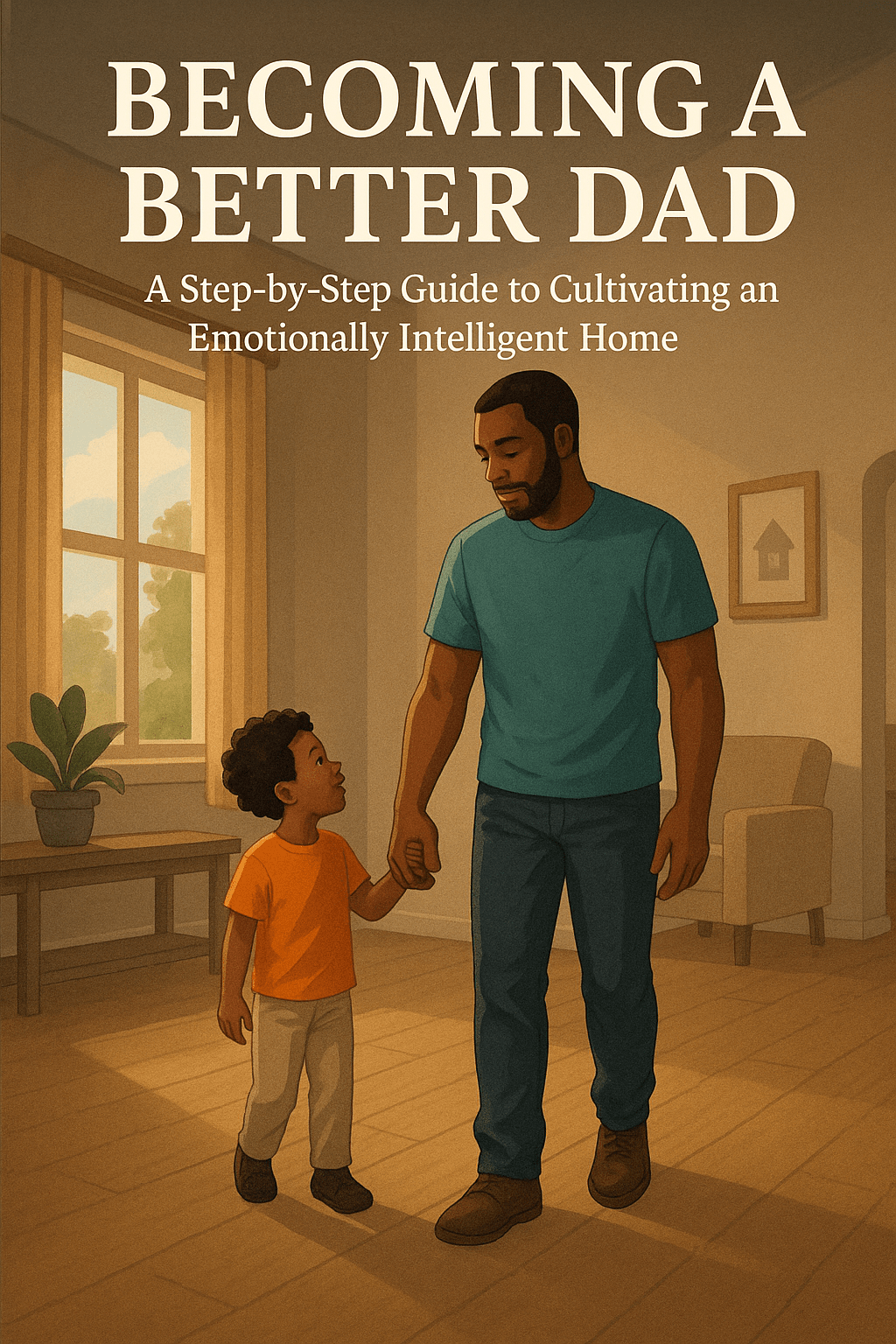
🛠️ Becoming a Better Dad: A Step-by-Step Guide to Cultivating an Emotionally Intelligent Home
Built on the 5 C’s of Development
⸻
1. Competence: Become Skillful in Fatherhood
“You can’t give what you don’t have.”
Competence is about building the practical and emotional skill set necessary to be an engaged, effective dad.
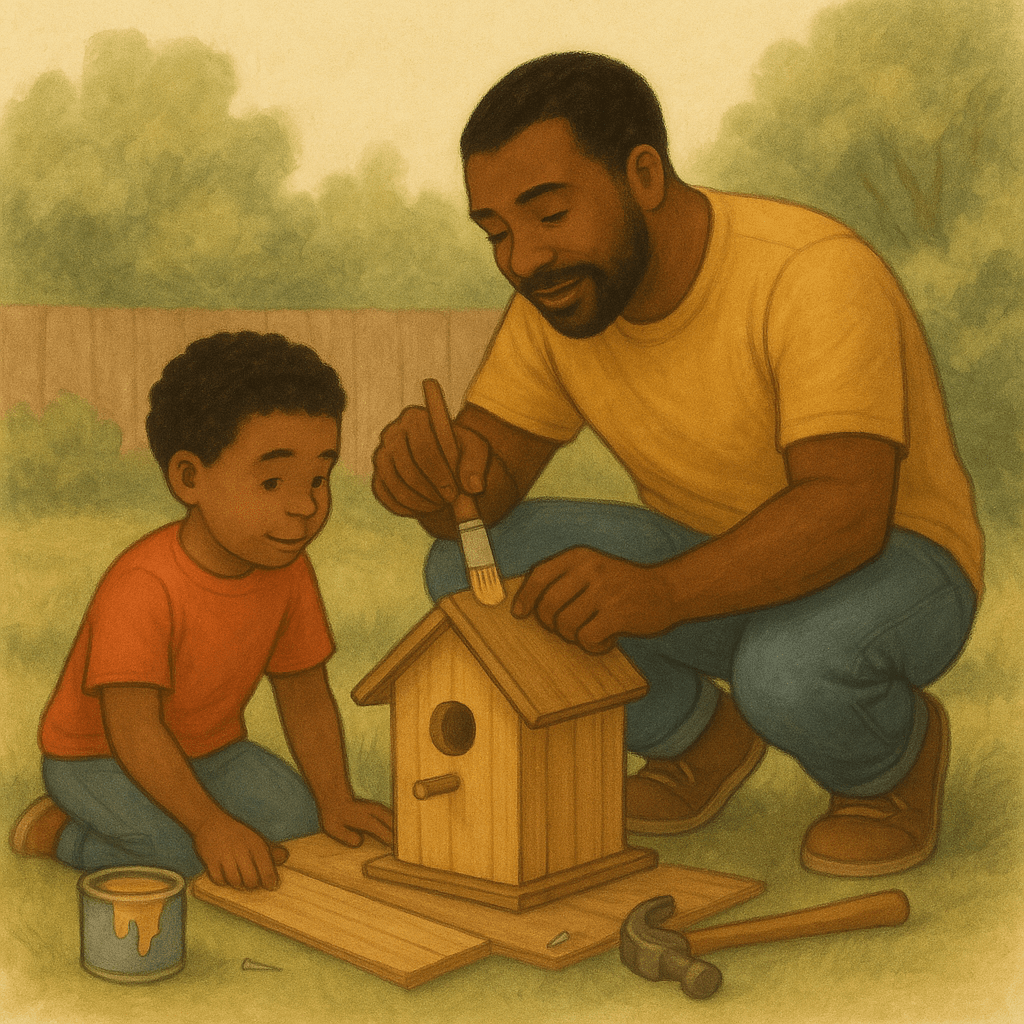
How-to:
• Learn child development: Understand what’s normal behavior for your child’s age. This helps you react with patience, not frustration.
• Develop emotional literacy: Learn to name your own feelings first. Start with “I feel ___ because ___.” Teach your children the same.
• Model calm responses: When you get angry, pause. Walk away. Breathe. Speak later. Emotional regulation is a skill, not a personality trait.
• Equip yourself: Read books, attend fatherhood classes, listen to podcasts. Think of this as your training ground.
🧠 Pro tip: Being emotionally intelligent starts with self-awareness. Journal once a week. Ask: What triggered me this week? How did I respond?
⸻
2. Confidence: Believe You Have What It Takes
“A father’s voice becomes his child’s inner voice.”
Confidence flows from competence. The more you grow, the more grounded you’ll feel in your role as a dad.
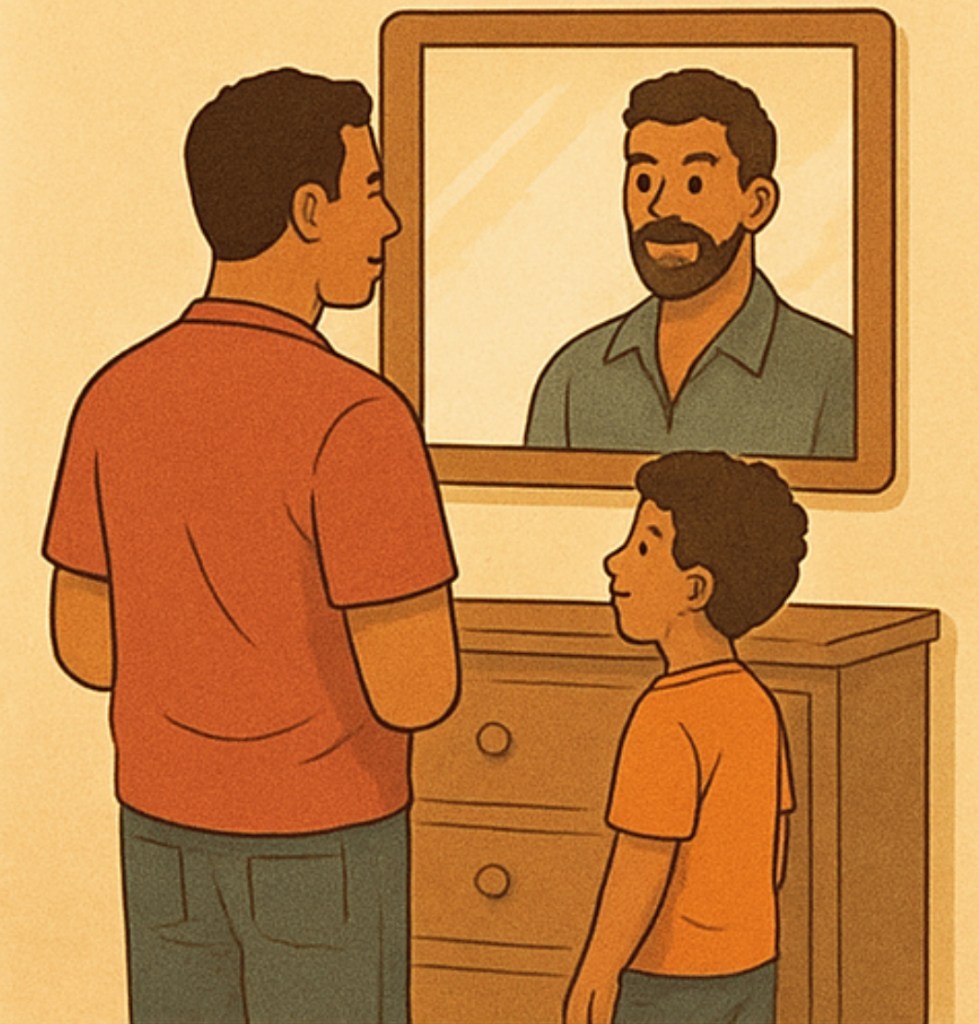
How-to:
• Forgive yourself for your past. Your mistakes do not define your future. It’s never too late to become the man your children need.
• Speak life into yourself: Write down affirmations that begin with “I am…” (e.g., “I am present. I am learning. I am capable.”)
• Take ownership: Don’t blame your partner, your upbringing, or your job. Own your choices. That’s how men grow.
• Celebrate the small wins: Did you show up to the school play? Did you comfort your child after a hard day? That matters.
🧠 Pro tip: Your kids don’t need a perfect dad. They need a present dad who’s becoming more whole every day.
⸻
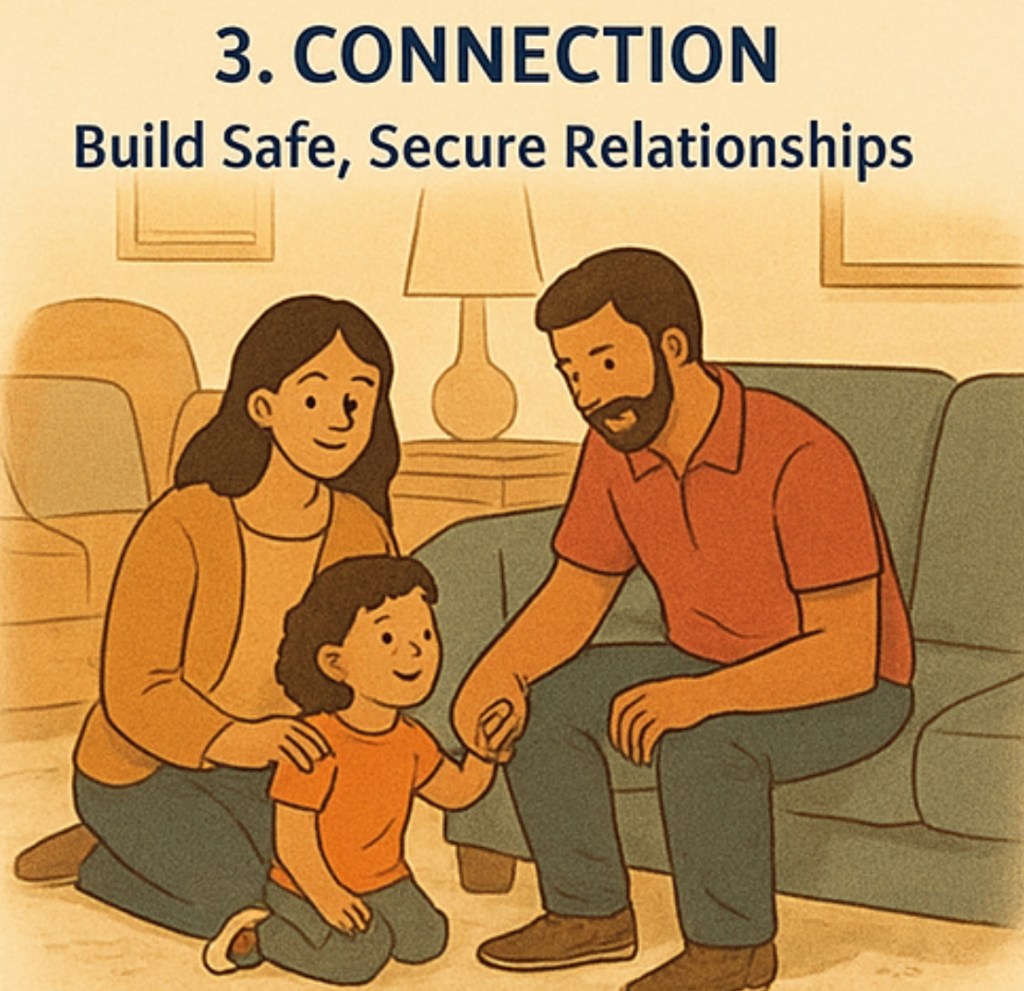
3. Connection: Build Safe, Secure Relationships
“Rules without relationship leads to rebellion.”
Connection is what turns a house into a home. Children and spouses alike crave connection with a grounded, available man.
How-to:
• Date your wife: Even if it’s a coffee in the car after the kids go to bed. Keep pursuing her. Let your kids see that love.
• Be curious with your kids: Ask them questions and really listen. Put your phone down. Get on their level. Connect over Legos, books, or basketball.
• Create rituals: Pancake Saturdays. Friday night prayers. Monthly hikes. These moments become emotional anchors.
• Be emotionally available: Let your children express sadness, fear, joy, frustration—without shame. You don’t have to fix it. Just be present.
🧠 Pro tip: Connection doesn’t require grand gestures. It requires consistent presence.
⸻
4. Character: Be the Man You Want Your Children to Become
“Who you are speaks so loudly, I can’t hear what you’re saying.”
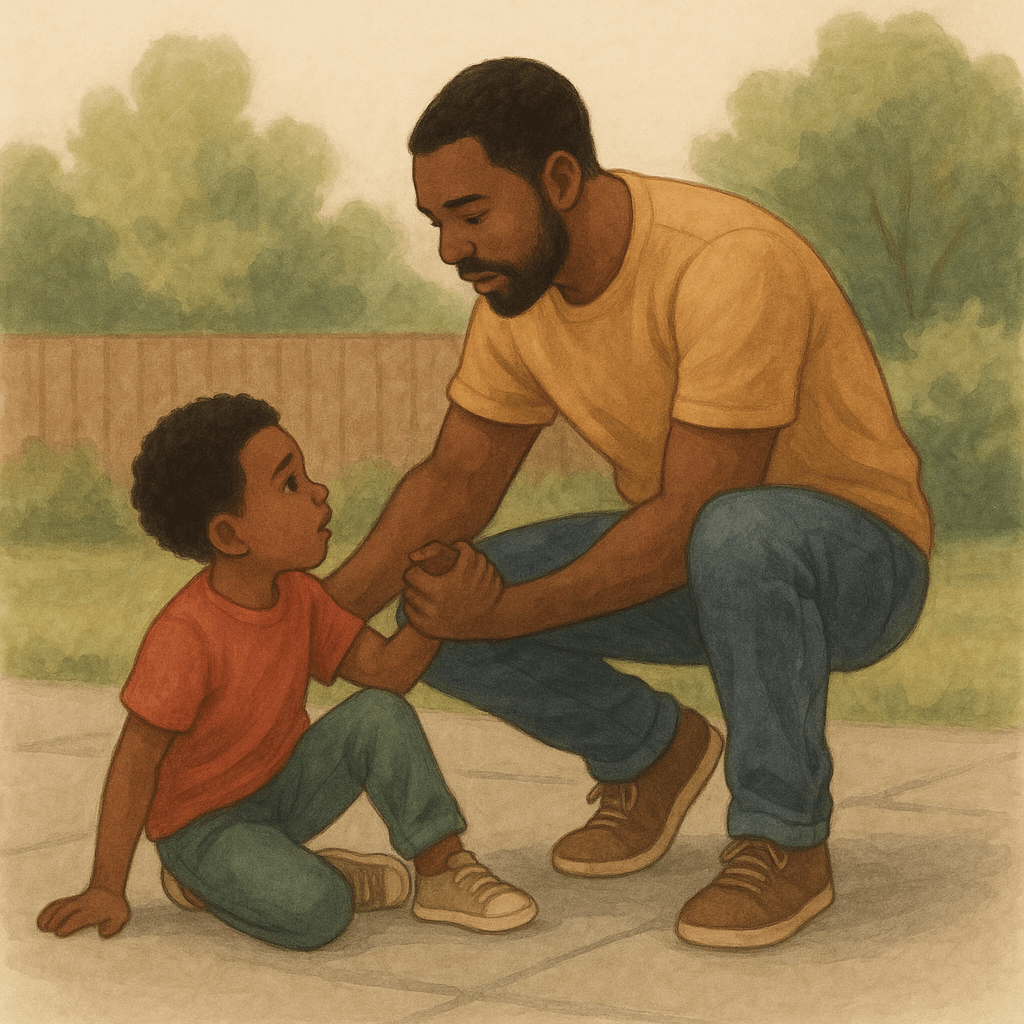
Character is about your integrity—the alignment between your values and your actions.
How-to:
• Live out your values: Let your yes mean yes and your no mean no. Apologize when you mess up. Your kids will respect honesty more than pride.
• Be consistent: Your discipline, your encouragement, your time—it all matters more when it’s predictable.
• Practice humility: Ask for forgiveness when you fall short. That doesn’t weaken your role—it deepens it.
• Lead by example: Show your children how to treat others, how to honor commitments, and how to navigate hard days without exploding.
🧠 Pro tip: Your kids are always watching. Let what they see make them feel safe and inspired.
⸻
5. Caring: Lead With Compassion and Empathy
“Compassion is not weakness—it’s strength under control.”
Caring is the heartbeat of an emotionally intelligent home. It’s about love in action.

How-to:
• Speak words that heal: Build up more than you correct. “I’m proud of you.” “I see you trying.” “You’re doing great.”
• Serve your family: Do the dishes. Change the diaper. Pick up groceries. These acts speak louder than speeches.
• Be present in emotions: When your child cries, hold them. When your wife is anxious, listen. You don’t need all the answers—you just need to show up.
• Show affection: Hugs, kisses, eye contact, “I love you”s. These are not soft—they are strong.
🧠 Pro tip: Emotionally safe homes are built when fathers show up with gentleness and strength.
⸻
🔚 Final Word: The Culture You Build Begins With You
You are the foundation of your home. And good news—you don’t have to be perfect to lead with love. You just have to be intentional.
• Your growth fuels your family’s growth.
• Your presence brings peace.
• Your love becomes legacy.
So start today. Start small. Start again if you need to.
 Forging Fatherhood
Leave a comment